In material handling, choosing the right forklift boosts efficiency and cuts costs. While internal combustion models once dominated, electric forklifts are preferred by businesses prioritizing sustainability, efficiency, and workplace well-being. Below are key scenarios for choosing electric models, plus insights into lithium technology shaping the industry.
Ideal Environments for Electric Forklifts
Electric forklifts excel in settings matching their unique strengths:
1. Indoor Facilities
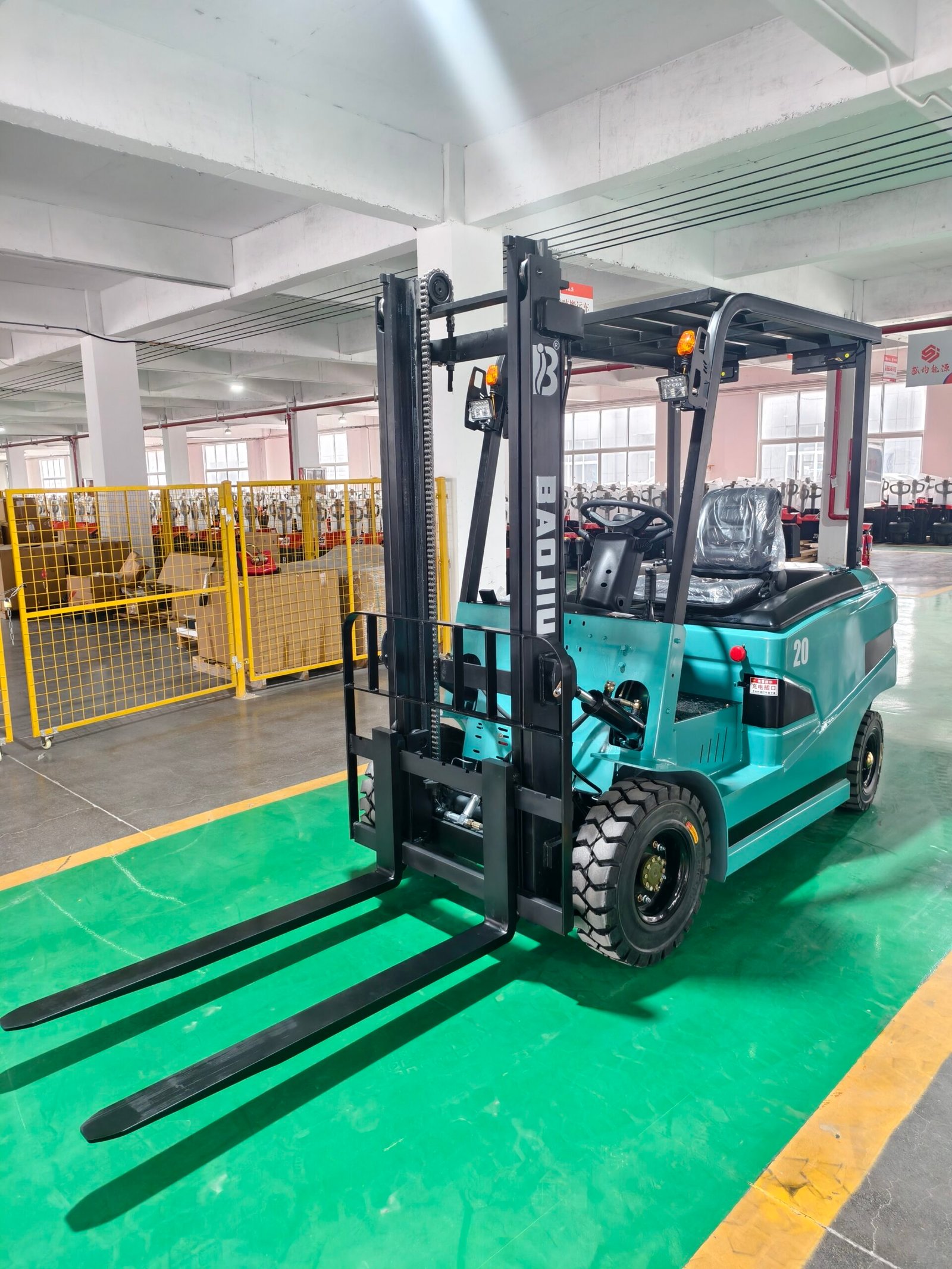
Indoor warehouses, distribution centers, and production lines are perfect for electric forklifts. Unlike fume-emitting, noisy IC models, they operate emission-free with minimal sound—preserving air quality and comfort. Their smooth precision also fits narrow warehouse aisles.
2. Industries with High Cleanliness Requirements
Food, pharmaceuticals, textiles, and electronics demand strict cleanliness. Electric models eliminate IC-related contamination risks (exhaust, oil leaks, noise), ensuring compliance, product safety, and cost avoidance.
3. Single or Double-Shift Operations with Regular Charging Time
Electric forklifts work well in single/double-shift operations with regular charging. Lithium variants reduce constraints; facilities with downtime (e.g., overnight) can integrate charging, and their reliability beats IC refueling needs.
Business Priorities That Favor Electric Forklifts
They also suit businesses focused on long-term value and corporate responsibility:
1. Long-Term Operational Costs
Though upfront costs are higher, lower total ownership costs prevail—fewer parts cut maintenance, and electricity is cheaper than fossil fuels, yielding big savings.
2. Employee Workplace Environment
Low noise (60-70 dB vs. 85+ dB for IC) and zero exhaust improve workplace health, reducing risks and boosting morale, retention, and safety compliance.
3. Corporate Environmental Image
Electric forklifts signal emission reduction commitment, aligning with global goals, appealing to stakeholders, and strengthening brand competitiveness.
The Future of Electric Forklifts: Lithium Technology
Lithium technology elevates electric forklifts. Despite higher initial costs, they offer unmatched advantages:
- Maintenance-Free: No upkeep (watering/equalizing) saves labor vs. lead-acid batteries.
- Rapid Charging: Full charge in 1-3 hours (vs. 8+ for lead-acid), enabling opportunity charging with no backups.
- Longer Lifespan: 5-8 years (2-3x lead-acid), cutting replacements and costs.
- High Energy Density: Consistent power and efficient ratio for peak performance.
Lithium models future-proof operations, as long-term savings offset higher upfront costs.
Conclusion
Electric forklifts are practical, cost-effective for indoor, high-cleanliness, and structured-shift operations. For businesses valuing efficiency, employee well-being, and sustainability, they (especially Lithium) offer a clear edge—an intelligent, green choice for material handling.